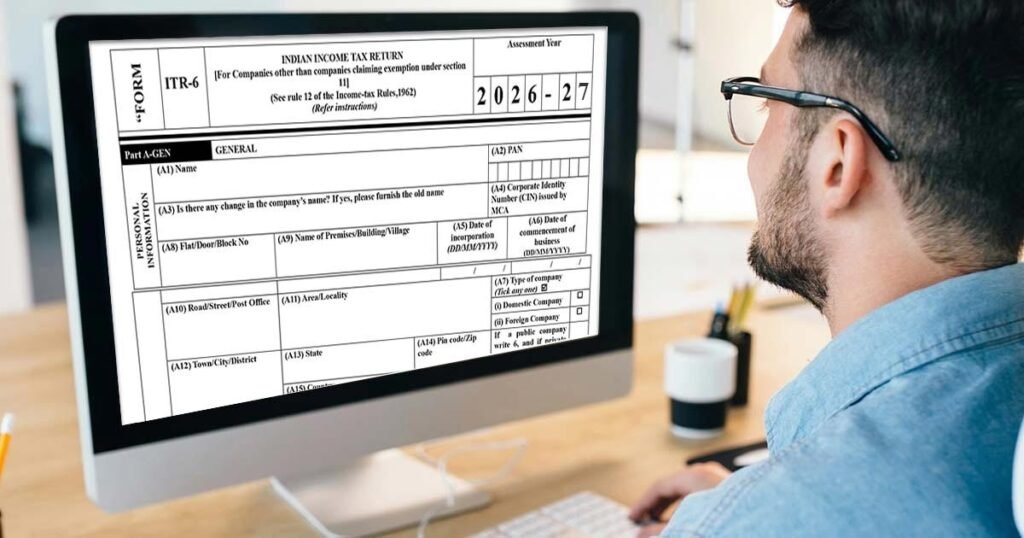
Every year, right around July, the same panic sets in for millions of Indians — “wait, have I filed my ITR yet?” If you’re one of them, take a breath. Learning how to file income tax return online genuinely isn’t as complicated as it seems once you break it into steps.
Let’s walk through the whole process properly, without the jargon overload most tax websites throw at you.
What Is an ITR and Who Needs to File One?
Quick answer: An Income Tax Return (ITR) is a form declaring your income, deductions, and tax liability to the Income Tax Department. Filing is mandatory if your income exceeds the basic exemption limit, and it’s advisable even below that threshold for record-keeping, loan applications, and visa purposes.
For FY 2025-26, the basic exemption limit under the new tax regime stands at ₹4 lakh (before rebate), though actual filing requirements depend on multiple factors beyond just this threshold.
Step 1: Gather Your Documents
Before logging into the income tax portal, keep these ready:
- Form 16 from your employer (for salaried individuals)
- Bank statements and interest certificates
- Form 26AS and Annual Information Statement (AIS), both available on the income tax portal
- Investment proofs for deductions under Section 80C, 80D, etc.
- PAN and Aadhaar, linked and active
Step 2: Choose the Correct ITR Form
Picking the wrong form is one of the most common filing mistakes:
- ITR-1 (Sahaj): For salaried individuals with income up to ₹50 lakh, one house property, and no capital gains
- ITR-2: For individuals with capital gains, multiple properties, or foreign income/assets
- ITR-3: For those with business or professional income
- ITR-4 (Sugam): For presumptive income scheme users, typically small business owners and professionals
Step 3: Log In and Pre-Fill Your Return
The income tax e-filing portal (incometax.gov.in) now auto-populates most data from your Form 26AS, AIS, and employer-submitted TDS details. Verify this pre-filled data carefully — errors do occur, especially with interest income and capital gains entries.
Step 4: Choose Between the Old and New Tax Regime
This decision genuinely affects your final tax liability. The new regime offers lower slab rates but fewer deductions; the old regime allows deductions like 80C, HRA, and home loan interest but at higher slab rates.
Picture a salaried professional in Jaipur with significant 80C investments (PPF, ELSS) and a home loan. Running the numbers under both regimes before filing showed the old regime saved her nearly ₹18,000 more in tax that year — a comparison she wouldn’t have made if she’d just defaulted to whichever regime the portal pre-selected.
[link to related guide on capital gains tax on mutual funds and stocks here]
Step 5: Claim Your Deductions Correctly
- Section 80C: Up to ₹1.5 lakh for PPF, ELSS, life insurance premiums, and similar instruments
- Section 80D: Health insurance premiums, up to ₹25,000-50,000 depending on age
- Section 24(b): Home loan interest deduction up to ₹2 lakh for self-occupied property
- Standard deduction: ₹75,000 for salaried individuals under the new regime (as per recent updates)
Step 6: Verify and Submit
After reviewing all sections, submit your return. Verification is mandatory within 30 days — you can do this instantly via Aadhaar OTP, net banking, or by sending a signed physical ITR-V to the CPC office in Bengaluru, though digital verification is far faster and recommended.
Common Mistakes to Avoid While Filing
- Choosing the wrong ITR form based on your actual income sources
- Forgetting to report interest income from savings accounts and fixed deposits
- Not reconciling Form 26AS/AIS data with your own records before submission
- Missing the verification step after submission, which technically means your return isn’t considered filed
FAQs
What’s the deadline for filing ITR in 2026? The standard deadline is typically July 31st for individuals not requiring an audit, though this can be extended by the government in certain years — always check the official portal for confirmation.
Can I file my ITR after the deadline? Yes, through a belated return, though this may attract a late filing fee and interest on any outstanding tax liability.
Is it mandatory to file ITR if my income is below the taxable limit? Not mandatory, but recommended for maintaining financial records, especially useful for loan applications, visa processing, or claiming refunds on TDS deducted.
Which tax regime should I choose — old or new? It depends on your specific deductions and investments. If you have significant 80C, 80D, or home loan deductions, the old regime might save more; otherwise, the new regime’s lower rates often work out better.
What happens if I don’t verify my ITR after filing? Your return is treated as not filed if verification isn’t completed within 30 days, which can lead to penalties and loss of any refund claims.
Conclusion
Knowing how to file income tax return online removes a huge amount of unnecessary stress every tax season. Gather your documents early, pick the correct ITR form, compare both tax regimes honestly, and don’t skip the final verification step.
Don’t wait until the last week of July to start this process — the portal tends to slow down significantly closer to the deadline, and rushing increases your chances of costly errors. Start today, even if it’s just gathering your documents.
Suggested alt text: “Person filing income tax return online on the government e-filing portal in India”