Sudden expense, not enough savings, and now you’re stuck deciding between two borrowing options that both promise “instant approval.” The personal loan vs credit card loan decision feels urgent when you’re in the moment, but rushing it can genuinely cost you thousands extra in interest.
Let’s slow down and actually compare these properly.
What’s the Fundamental Difference?
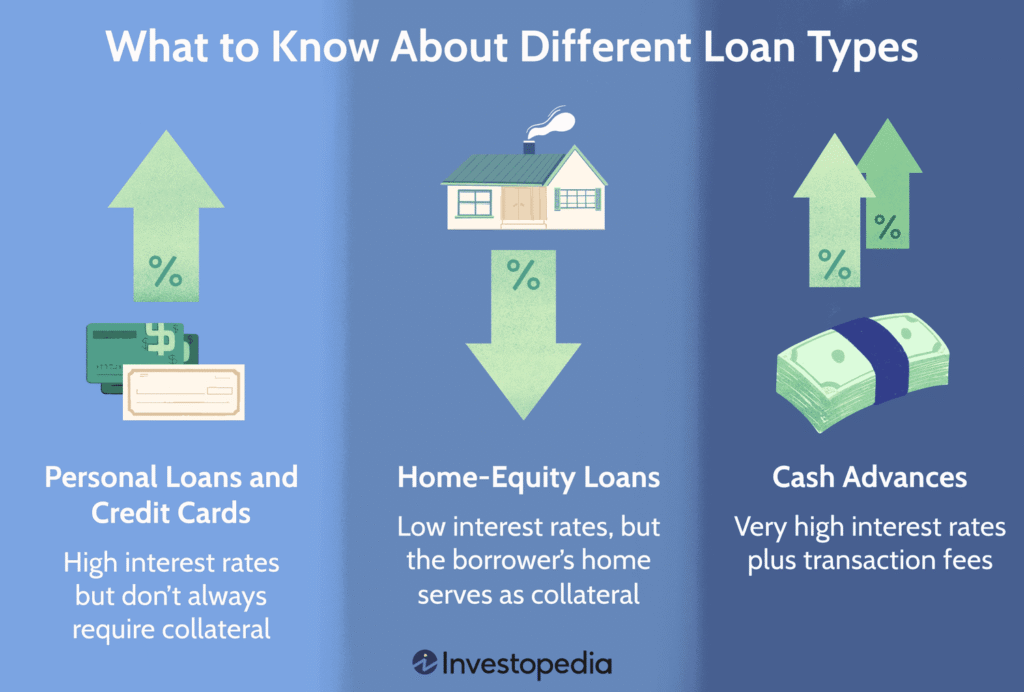
Quick answer: A personal loan is a fixed-tenure loan with a set interest rate and EMI, typically ranging from 10-24% annually depending on your credit profile. A credit card loan (or credit card EMI/cash advance) usually carries higher interest, often 30-42% annually, but offers faster, sometimes instant disbursal.
Both serve the purpose of quick funds, but the cost structure differs significantly.
Interest Rate Comparison
This is where the real gap shows up:
- Personal loans: 10-24% per annum, depending on your credit score, income, and lender
- Credit card EMI conversions: 15-24% per annum, roughly comparable to personal loans for pre-approved offers
- Credit card cash withdrawals/advances: 30-42% per annum, plus additional withdrawal fees — genuinely one of the most expensive borrowing options available
If you’re looking at a cash advance on your credit card versus a personal loan for the same amount, the personal loan almost always works out cheaper over time.
Speed of Disbursal: Where Credit Cards Win
Credit card loans, especially cash advances or EMI conversions on existing limits, are near-instant. No fresh application, no waiting period — the money’s essentially already available. Personal loans, even “instant” ones from digital lenders, typically take a few hours to 2-3 days for disbursal after approval.
If your emergency truly can’t wait even a few hours, this speed difference matters. For anything with a bit more lead time, it’s worth the wait for the cheaper personal loan option.
A Realistic Scenario
Picture a small business owner in Jaipur who needed ₹1.5 lakh urgently to pay a supplier. He initially considered a credit card cash advance, which would’ve cost him roughly 36% annual interest plus a 2.5% withdrawal fee upfront. Instead, he applied for a personal loan through his existing bank, got approved within a day since he had a good relationship and credit history, and locked in 14% annual interest instead. That’s a difference of thousands of rupees in interest alone over the following year.
When a Credit Card Loan Actually Makes Sense
- Small, short-term amounts you can repay within 1-3 months
- Genuine emergencies where even a few hours of delay matters
- Pre-approved EMI conversion offers with competitive rates, sometimes lower than a fresh personal loan application
- When your credit score isn’t strong enough to qualify for favorable personal loan terms
When a Personal Loan Makes More Sense
- Larger amounts, generally above ₹50,000-1,00,000
- Longer repayment tenure needs, from 1 to 5 years
- When you have time to compare lenders and negotiate better rates
- Debt consolidation, where a single lower-interest loan replaces multiple high-interest debts
[link to related guide on getting out of credit card debt here]
Fees and Charges to Watch For
Neither option is free of additional costs beyond interest:
- Personal loans: Processing fees (0.5-3% of loan amount), prepayment penalties on some loans, documentation charges
- Credit card loans: Cash advance fees (2.5-3% per withdrawal), late payment penalties, and interest accruing from day one with no grace period on cash advances specifically
Impact on Your Credit Score
Both affect your credit score, but differently. Personal loans, once fully repaid on schedule, generally build a positive credit history and improve your credit mix. Credit card loans, particularly high utilization from cash advances, can actually hurt your credit utilization ratio and, by extension, your score — even before you’ve missed a single payment.
FAQs
Which is cheaper for a large amount — personal loan or credit card loan? Personal loans are almost always cheaper for larger amounts due to significantly lower interest rates compared to credit card cash advances.
Can I convert my credit card bill into an EMI to save on interest? Yes, most banks offer EMI conversion on credit card bills, often at lower rates than cash advances, though usually still higher than a fresh personal loan.
Does taking a credit card cash advance affect my credit limit? Yes, it reduces your available credit limit immediately and can increase your credit utilization ratio, potentially impacting your credit score.
How quickly can I get a personal loan approved in 2026? Digital lenders and many banks now offer approval within a few hours to a day for pre-qualified customers, with disbursal often within 24-48 hours.
Is it better to close a credit card loan early if I have the funds? Generally yes, since interest accrues daily on outstanding balances. Just check if there’s a prepayment penalty before doing so.
Conclusion
The personal loan vs credit card loan decision really boils down to urgency versus cost. If you genuinely need funds within hours, a credit card loan might be your only realistic option, despite the higher cost. For anything with even a day or two of lead time, a personal loan almost always saves you money.
Before borrowing either way, take twenty minutes to actually compare the total interest cost, not just the monthly EMI figure — that’s where the real difference in what you’ll pay becomes clear.
Suggested alt text: “Side-by-side comparison of personal loan and credit card loan interest rates in India”