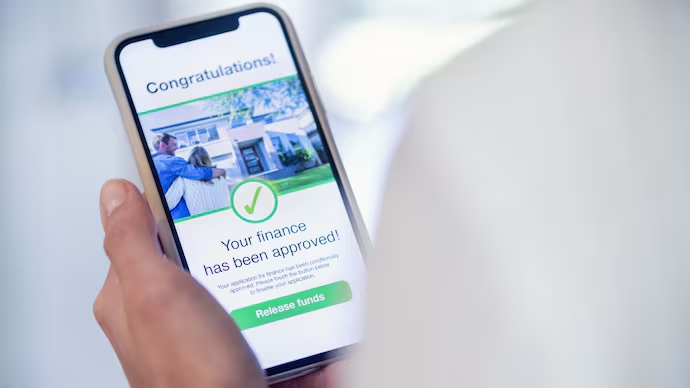
“Pay in 4 easy installments, zero interest.” Sounds harmless, right? That’s exactly the pitch behind the explosion of buy now pay later India apps over the past few years — and while they genuinely offer convenience, the hidden risks deserve far more attention than the flashy checkout button suggests.
Let’s actually break down how these apps work under the hood, and where things can quietly go wrong.
What Exactly Is Buy Now Pay Later?
Quick answer: Buy Now Pay Later (BNPL) is a short-term financing option that lets you purchase items immediately and pay for them in installments, often interest-free if repaid within a specific window (usually 15-45 days). Popular players in India include LazyPay, Simpl, and various bank/e-commerce partnerships like Flipkart Pay Later.
The core appeal is instant gratification without immediate full payment — but that convenience comes with real strings attached if you’re not careful.
How Does BNPL Actually Work?
- You select BNPL as a payment option at checkout on partner platforms
- The provider does a quick, often instant, soft credit check
- Your purchase amount gets settled by the BNPL provider to the merchant immediately
- You repay in installments, or as a lump sum, within the specified interest-free window
- Missing this window triggers interest charges, often quite steep, plus potential late fees
Why It Feels So Frictionless (And Why That’s a Problem)
Traditional credit card applications involve paperwork, income verification, and waiting periods. BNPL skips most of this, often approving credit limits within seconds based on alternative data points like your transaction history or basic KYC.
This ease of access is exactly what makes it risky for impulsive spenders. I’ve noticed that when payment friction disappears completely, spending discipline often disappears right along with it.
The Real Hidden Risks
- Multiple BNPL accounts stacking up: Using several BNPL apps simultaneously across different platforms can quietly accumulate debt that’s hard to track holistically
- Late payment interest: Miss the interest-free window, and rates can jump to 24-36% annually — comparable to expensive credit card debt
- Credit score impact: Missed BNPL payments are increasingly being reported to credit bureaus, which can hurt your credit score just like a missed loan EMI
- Encourages overspending: The psychological ease of “pay later” can lead to purchases you wouldn’t have made if paying the full amount upfront
A Realistic Scenario
Picture a young professional in Jaipur using three different BNPL apps across e-commerce and food delivery platforms simultaneously, each with small, seemingly manageable installments. Individually, none of them feel significant. Collectively, by month three, the combined repayments were eating nearly 20% of her monthly salary — money she hadn’t consciously budgeted for because each app felt separate and small in isolation.
[link to related guide on digital lending apps in India here]
How to Use BNPL Responsibly
- Track all your active BNPL commitments in one place, even a simple notes app, rather than relying on memory across multiple apps
- Only use BNPL for planned purchases you’d have made anyway, not impulse buys enabled by the payment flexibility
- Set calendar reminders for repayment deadlines to avoid accidentally slipping into the interest-charging window
- Treat BNPL limits the same way you’d treat a credit card limit — as a maximum, not a target to use fully
Is BNPL Regulated in India?
The Reserve Bank of India has increasingly brought BNPL and digital lending under closer regulatory scrutiny, requiring clearer disclosure of terms and, in some cases, classifying certain BNPL arrangements similarly to traditional credit products for reporting purposes. Regulations continue evolving, so it’s worth staying updated through official RBI notifications if you use these services regularly.
FAQs
Does using BNPL affect my credit score? Increasingly, yes. Many BNPL providers now report repayment behavior to credit bureaus, meaning missed payments can hurt your score just like traditional credit products.
Is BNPL genuinely interest-free? Only if repaid within the specified window, typically 15-45 days. Beyond that, interest rates can be quite high, often comparable to or exceeding credit card rates.
Can I use multiple BNPL apps at the same time? Technically yes, but doing so makes it much harder to track your total outstanding commitments, increasing the risk of accidental overspending or missed payments.
Is BNPL a good alternative to a credit card? It depends on your discipline and usage pattern. For occasional, planned purchases with strict repayment discipline, it can work fine. For frequent use, a well-managed credit card with rewards might actually serve you better.
What happens if I can’t repay my BNPL installment on time? You’ll typically face late fees and interest charges, and repeated missed payments may be reported to credit bureaus, affecting your future credit eligibility.
Conclusion
Buy now pay later India apps genuinely offer convenience, but that convenience is exactly what makes them risky if used without discipline. Track your commitments actively, respect the interest-free windows, and resist the temptation to use the ease of approval as a reason to spend beyond your actual budget.
Before your next BNPL checkout, pause for a moment and ask whether you’d still make this purchase if you had to pay the full amount right now. If the answer’s no, that’s probably a purchase worth skipping altogether.
Suggested alt text: “Smartphone checkout screen showing buy now pay later payment option in India”